

Blue eclectus smuggling
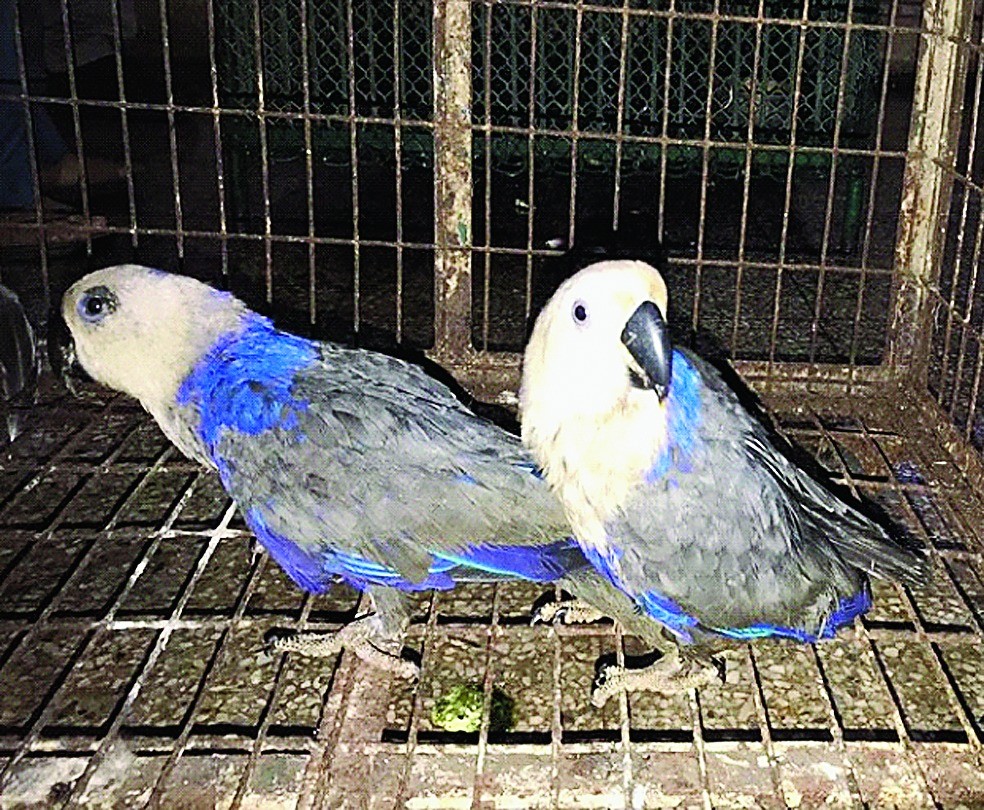
India: Three blue eclectus parrots, one of them the more flamboyant male of the species, were found in the boot of a car that customs officials had intercepted on the Kalyani Expressway on June 27. Four pairs of African pygmy falcons, three red-and-blue macaws and seven white ducks were confiscated during the same operation.
The birds, smuggled into North 24-Parganas from Bangladesh, were being taken to a buyer in another state when officials of the Directorate of Revenue Intelligence, the intelligence wing of the customs department, rescued them. The pricey parrots have since been spending a potentially less demanding life at the Alipore zoo hospital.
The three persons arrested for smuggling the blue eclectus parrots that were rescued on June 27 have been identified as middlemen. "The birds would have changed hands in multiple states before reaching the final buyer," a customs official said.
The trio have been booked under the Customs Act, 1962. They could not be charged under the Indian Wildlife Protection Act because it is applicable only to indigenous species. Eclectus parrots are native to Indonesia, Papua New Guinea, the Solomon Islands and Australia. Blue eclectus parrots - the turquoise male is the size of a cockatoo and wears gorgeous blue streaks offset by an orange beak - are coveted because they not only look brilliant but also make good pets, according to a collector.
A paper in the journal of the American Federation of Aviculture traces the ownership of the first blue eclectus parrots to a European couple. The couple had purchased a pair of eclectus parrots sometime in the Nineties that went on to beget a male and a female. The siblings were separated from their parents and kept in another aviary, but a mishap was waiting to happen.
"It just so happened that an old nest box was hanging in that aviary and the owners never thought or bothered to take it down. At two years of age, 'mother nature' took over and the brother and sister pair went to nest and laid two fertile eggs. When the chicks started feathering, the breeder noticed that one of the birds, the hen, was very unusual in colour. She was blue and grey. Thus, the first blue eclectus was hatched in 1995. Since then, two more blues have been bred, including one magnificent-looking blue cock," states the paper by Roger Bringas, published in 2001.
According to birdwatcher Sujan Chatterjee, the blue varieties continue to be bred only in captivity. "Mutation-coloured birds usually cannot survive in the wild because their colour singles them out and makes them vulnerable to many predators."
Source: (The Telegraph India)
